
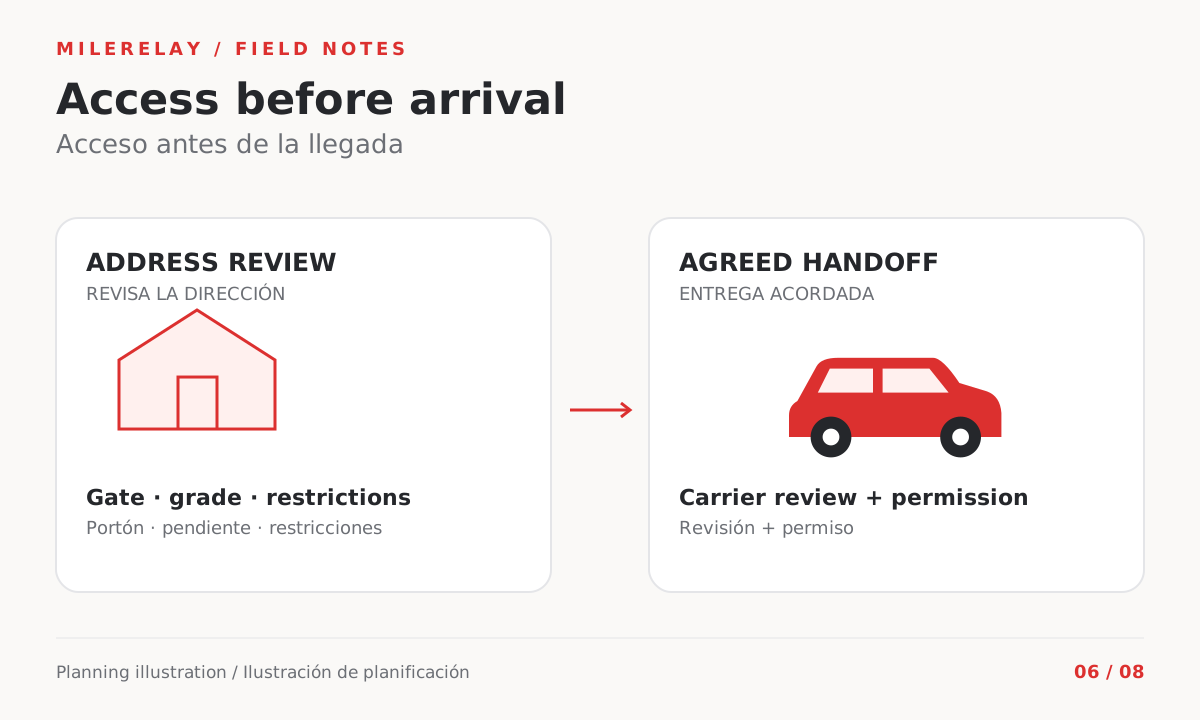
When you request California car shipping, the street address is the beginning of the access discussion. A location that works for your car may need a different plan for a vehicle transporter. Preparing that discussion early gives you time to speak with a building manager, arrange an authorized contact or consider a nearby meeting location with the carrier.
Describe the last part of the approach
Tell the coordinator what a driver would encounter near the address. Is the car inside a garage? Does the property have a gate or scheduled delivery hours? Are there tight turns, a steep approach, overhanging trees or posted truck restrictions? You do not have to assess truck engineering yourself. Your role is to share what you know so the carrier can evaluate the proposed handoff.
A few clear photos of the approach can be more useful than saying “parking is usually easy.” Ask before sending images that include private property or other people's information. Keep the description focused on access and let the coordinator explain what additional details are needed.
Let the carrier confirm the route
California has official state and local truck-route resources. Caltrans' truck network page identifies its state-highway truck information, while the local route directory points to local authorities and advises confirming their information. These resources show why a passenger-car route is not enough to settle truck access.
Do not promise that a truck can enter a street simply because another delivery vehicle has used it. Share the address and restrictions, then ask the assigned carrier to confirm the plan. If the location changes, make sure the new location appears in the updated handoff instructions.
Plan a meeting point together
If an alternative is needed, ask the carrier what type of location it can use. Discuss permission, space, legal stopping and the ability of both contacts to reach it. A large-looking lot is not automatically available for vehicle loading. Confirm any property permission that is required rather than treating a map pin as approval.
Also decide how you will leave the meeting point after handing over the car. At delivery, think through how the receiver will reach the location and take the vehicle away. These small travel arrangements are easy to miss when the transport request focuses entirely on the long-distance trip.
Include building and seller schedules
For a condominium or apartment pickup, ask who controls the gate and whether the car can be moved to an agreed accessible location. For a dealer pickup, identify the employee authorized to release it and the hours when that person is available. Keep access arrangements separate from estimated truck arrival times so everyone understands what still needs confirmation.
If the vehicle cannot move normally, say so before discussing an alternative meeting point. Moving a non-running car out of a garage can be a separate challenge. Our non-running car shipping guide helps identify the details that need a specific equipment discussion.
Keep the final plan easy to find
Save one message containing the confirmed meeting location, contact names, estimated window and any property instructions. Share it with the person who will attend. Add the condition-record checklist from our inspection guide so the handoff covers both access and documentation.
Start with our California shipping page, then request a route review with the access details you already know. MileRelay is an independent lead referral website, with Bold Auto Transport as the intended provider. A request does not guarantee service at a particular driveway, confirm a carrier or establish a booking.