
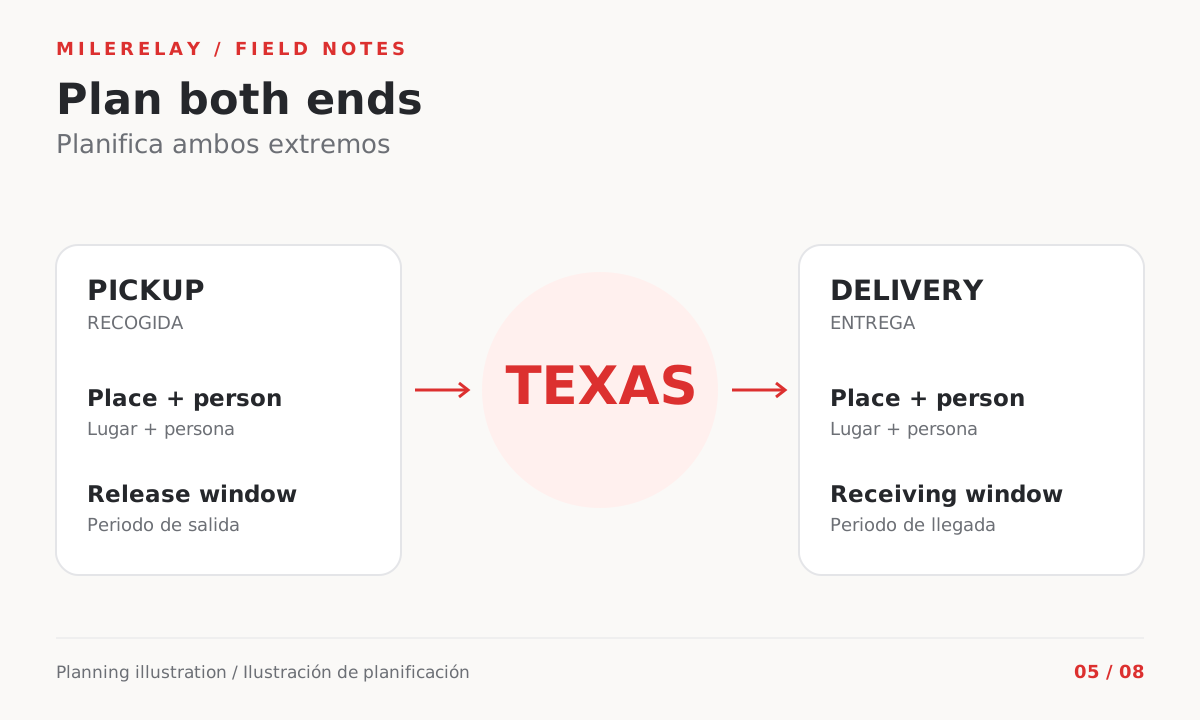
A Texas car shipping request becomes more useful when it describes both ends of the trip. “Moving to Texas” explains your goal, but it does not tell a coordinator where the vehicle will be released, who can meet the carrier or when the destination is ready. Build a two-end plan before comparing proposals, especially when the car is part of a larger interstate move.
Use exact places rather than a state-to-state label
Start with the pickup and delivery city and ZIP code. Then describe the setting at each address. An apartment complex, a dealership and a rural property can present different handoff questions even if they share the same mailing area. Include gates, appointment requirements and any known limitations that the carrier should review.
For example, a move from a Dallas apartment to an out-of-state house should describe both locations, not just the interstate route. A purchase from a Houston-area seller needs the seller's release contact as well as the receiving address. These are planning examples, not promises about a particular lane's availability or speed.
Separate the dates in your move
Write down when the car can leave, when your pickup contact is available and when someone can receive it. Add other commitments on a separate line: a flight, a lease start or a work date. Keeping these dates separate helps you explain which part of the plan is flexible and which part needs a backup.
If you will fly before the car is collected, arrange an authorized pickup contact in advance. If your new property will not be accessible immediately, do not assume the carrier can wait indefinitely. Ask how a changed handoff date or location would be handled before accepting the proposed arrangement.
Prepare the people as well as the vehicle
Make a contact sheet with a primary person and a practical backup at each end. Confirm that each person knows the address, has the relevant documents and can access the car or meeting location. Tell the coordinator who should receive schedule updates so changes do not get lost between a seller, family member and receiver.
Pack essential documents and belongings separately from the vehicle. Review the assigned carrier's preparation instructions and ask about anything you intended to leave inside. Our pickup and delivery inspection guide can help your contacts organize the condition record without relying on you being physically present.
Keep road information current
Consult current information when the move approaches rather than building the entire plan around an old route screenshot. TxDOT's DriveTexas information describes official updates for closures, construction and weather-related road conditions. Use those resources for context; the carrier remains responsible for its own routing and operating decisions.
If a road issue affects your proposed meeting point, share the factual update with the coordinator and ask what changes are needed. Avoid directing a large truck onto a neighborhood alternative based on a passenger-car navigation suggestion.
Ask for one clear written plan
Before booking, review the proposed equipment, price, payment terms, cancellation conditions and estimated windows. Ask who will confirm carrier assignment and whom each contact should call. A clear Texas plan does not need a guaranteed number of days; it needs consistent information and a way to handle changes.
Use our Texas car shipping page to organize the request, then send the two-end plan for review. MileRelay is an independent lead referral website, with Bold Auto Transport as the intended provider. Submitting details does not reserve a carrier or confirm a shipment. The eventual provider and carrier must review the specific route and requirements.