
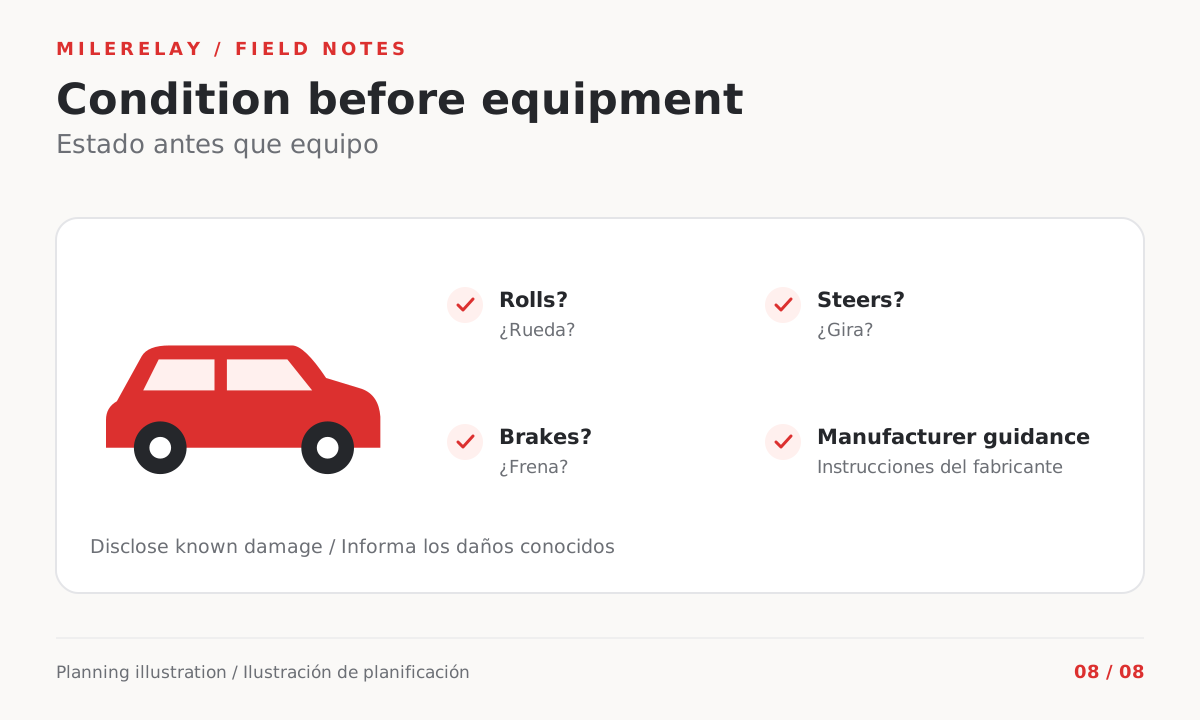
A non-running car and an electric vehicle raise different planning questions. “Electric” describes the powertrain; “non-running” describes a condition that may affect loading. Some electric vehicles operate normally, while some gasoline vehicles cannot move. Start with the car's actual abilities and known issues so the coordinator can discuss appropriate equipment instead of making assumptions from a label.
Describe what works and what does not
Write down whether the vehicle starts, moves under its own power, rolls, steers and brakes. Note whether keys are available and whether wheels are present and able to turn. Include low clearance, leaks, modifications or damage you know about. If you are buying remotely and cannot verify an answer, say that it is unknown.
Bold's inoperable-vehicle page identifies condition, access and loading equipment as details that require review before carrier acceptance. A brief video or clear photos may help explain the condition, but ask what information is needed before arranging any movement. Do not attempt a loading technique simply to demonstrate that the car can be moved.
Separate the loading location from the vehicle condition
A car that rolls may still be difficult to reach inside a garage or behind other vehicles. Describe where it sits, whether there is room to approach it and who controls access. Ask the seller or property contact whether the car can be made available at the agreed location without assuming the transport carrier will perform a separate recovery job.
For a project car, include loose or detached components in the discussion rather than placing them in the vehicle without approval. Ask how those items should be handled. The aim is to define the proposed shipment accurately before the carrier evaluates it.
Use the manufacturer's instructions for an EV
Locate the owner's manual and any manufacturer transport instructions for the specific model and year. Ask how those instructions should be shared with the carrier. NHTSA's EV guidance notes that electric and hybrid vehicles need special care when towed because movement on a driven axle can cause damage.
Do not apply another brand's procedure or a universal battery percentage. Confirm the requested charge level and operating instructions with the assigned carrier in light of the manufacturer's guidance. Explain any key, app, transport-mode or parking-brake requirements that the manual identifies. Arrange access without sharing an unrelated account password.
Disclose damage before requesting ordinary transport
Tell the coordinator about known collision, fire, flood or battery damage, including suspected damage that has not been assessed. NHTSA's guidance for towing and storage operators identifies additional hazards associated with damaged high-voltage batteries. Such a vehicle needs a qualified assessment and an accepted handling plan; do not present it as a routine operable shipment.
This article is a planning checklist, not a towing procedure or an instruction to handle high-voltage equipment. Use the manufacturer and qualified professionals for model-specific technical decisions. If the vehicle's condition changes before pickup, update the coordinator rather than relying on an earlier description.
Turn the condition brief into clear questions
Ask whether the proposed carrier has reviewed the condition, what loading equipment is planned and whether both locations support that method. Request the corresponding price and terms in writing. Our non-running car guide and equipment comparison can help structure the conversation.
Submit the condition details for review when you have gathered them. MileRelay is an independent lead referral website, with Bold Auto Transport as the intended provider. A request does not establish eligibility, reserve equipment or confirm a transport booking. The specific vehicle and handling requirements need review before a carrier accepts the shipment.